قياس الانجاز
أفضل الممارسات لتطوير آليات قياس هادفة وذات قيمة.


تساعد بطاقة الاختبار الفرق على التحقق السريع من الافتراضات والأفكار قبل استثمار وقت أو موارد كبيرة في التنفيذ.
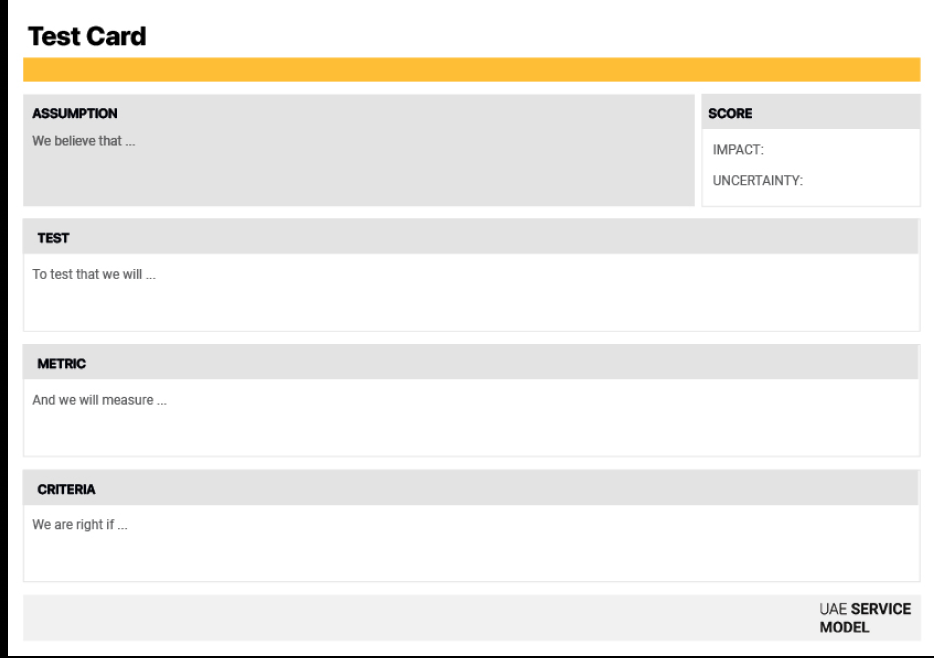
تمكّن بطاقة الاختبار الفرق من التحقق من الافتراضات قبل الشروع في بناء حل كامل، من خلال إضفاء هيكل واضح على التجارب وتحديد ما يتم اختباره وكيفية قياس الإنجاز بدقة. وتمنع هذه الأداة "التجريب العشوائي"، حيث تلزم الفرق بتقييم الأثر ودرجة عدم اليقين، ما يساعد على إعطاء الأولوية لاختبار الافتراضات الأعلى خطورة أولاً. وبذلك تنتقل الجهة من مرحلة "نعتقد أن هذا سينجح" إلى "لدينا دليل على أن هذا ناجح".

ساعة واحدة للتخطيط (وقد تختلف مدة التنفيذ بحسب طبيعة الاختبار)

من مبتدئ إلى متوسط

الاختبار والتحقق

بطاقة المفهوم التصوّري أو نموذج أولي

نموذج بطاقة الاختبار (رقمي أو مطبوع) ونماذج أولية أو تصاميم مبدئية وبيانات ملاحظات المتعاملين وأدوات التحليل ومؤشرات التقييم

مصممو الخدمات والمسؤولون عن المنتجات وقادة البحث ومحللو البيانات وصناع القرار
ابدأ بوضع الافتراض المحدد الذي ترغب في التحقق منه.
"نعتقد أن…" (مثل: "تبسيط النموذج سيزيد من معدلات الاستكمال").
قيّم الافتراض لتحديد ما إذا كان يستحق الاختبار الآن.
الأثر: إذا كان هذا الافتراض صحيحاً، فما مدى قيمته؟ (مرتفعة/منخفضة)
عدم اليقين: ما مدى تأكدنا من صحته؟ (عدم يقين مرتفع = أولوية للاختبار).
صف التجربة المحددة التي سيتم تنفيذها.
"للتحقق من ذلك، سنقوم بـ…" (مثل: "إجراء اختبار أ/ب على الموقع الإلكتروني المباشر لمدة أسبوع واحد").
حدد بدقة البيانات التي سيتم جمعها.
وسنقيس…" (مثل: "معدل إكمال كل من النموذجين").
عرّف بوضوح حد النجاح أو الإخفاق لتجنب تغيير المعايير لاحقاً.
"نحن على صواب إذا…" (مثل: "حقق النموذج المختصر معدل إكمال أعلى بنسبة 20٪ مقارنة بالنموذج الطويل").
أصبحت بطاقة الاختبار الآن هي خطة العمل. الخطوة التالية هي تنفيذ الاختبار وجمع البيانات وتوثيق النتائج.
توليد الافتراضات: قدّم مفهوم الخدمة إلى أداة الذكاء الاصطناعي واسأل: "ما هي أكثر الافتراضات خطورة في مفهوم الخدمة المقدم؟ حولها إلى عبارات تبدأ بعبارة نعتقد أن…".
اقتراح المقاييس: اسأل أداة الذكاء الاصطناعي: "أرغب في اختبار ما إذا كان المتعاملون يثقون بهذه الميزة الجديدة المدعومة بالذكاء الاصطناعي. ما هي المقاييس الثلاثة الكمية
إذا كان عدم اليقين منخفضاً، فانتقل إلى التنفيذ مباشرة. وإذا كان الأثر منخفضاً، فلا تُهدر الوقت في اختباره.
غالباً ما توفر النماذج الأولية منخفضة الدقة أو التجارب السريعة تعلماً أسرع.
تجنب الأهداف غير الواضحة واربط كل اختبار بنتائج قابلة للقياس بوضوح.
يوفر سلوك المتعاملين الفعلي رؤى أكثر موثوقية من التعليقات والآراء الداخلية فقط.
احرص على تسجيل خطوات العمل والنتائج لمشاركة التعلم مع الفريق الأكبر.
لا يُعد الاختبار خطوة واحدة فقط، بل حلقة مستمرة لتحسين الحلول وتطويرها.
اختبار "تبسيط آلية جمع الآراء والتعليقات"
السيناريو: يسعى فريق إلى زيادة عدد المتعاملين الذين يقدمون ملاحظاتهم وآرائهم بشأن الخدمة.
من خلال إلزام الفريق بتحديد معيار نجاح أو إخفاق صارم (20٪) منذ البداية، حولت بطاقة الاختبار النقاش غير الموضوعي إلى تجربة قابلة للقياس. وضمن ذلك عدم استثمار الفريق للموارد في تنفيذ الحل إلا بعد إثبات قدرته على تحقيق قيمة ملموسة.

مبادئ تصاميمنا المرتبطة بمخطط الخدمة.