التمحور حول الإنسان
المتعامل أولاً في جميع أعمالنا.


تعمل بطاقة الشخصية على تحويل بيانات البحث الأولية إلى ملفات شخصية للمتعامل.
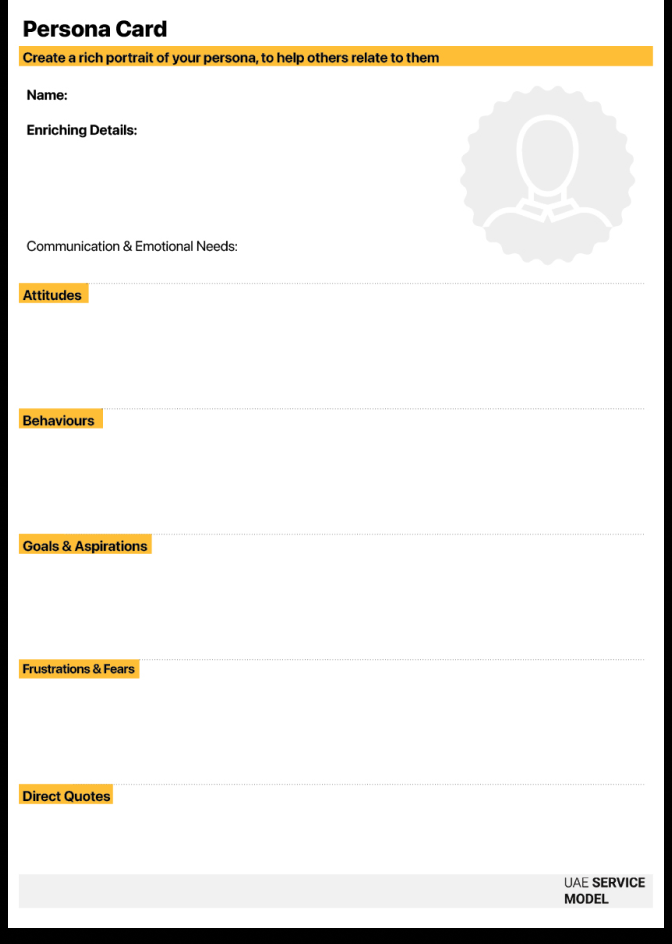
تعمل بطاقة الشخصية على تحويل بيانات البحث الأولية إلى ملفات شخصية للمتعامل. وتسهم في تمكين الفرق من تصور شرائح محددة من المتعاملين وبناء التعاطف معهم من خلال تحديد أهدافهم ودوافعهم وسلوكياتهم. وبدلاً من التصميم لمتعامل "عام"، تُلزم هذه الأداة الفرق بتصميم شخصيات لمتعاملين حقيقيين باحتياجات محددة وواضحة. كما تساعد على جمع الفرق متعددة التخصصات حول فهم مشترك لشريحة المتعاملين التي يتم خدمتها، ما يضمن أن تعكس جميع القرارات - من السياسات إلى أدق تفاصيل الواجهة - التنوع الإنساني الحقيقي وليس مجرد افتراضات.

1-2 ساعة (لكل شخصية)

من مبتدئ إلى متوسط

الفهم والتعاطف

نتائج الأبحاث

نموذج بطاقة الشخصية (رقمي أو مطبوع) ورؤى ونتائج البحث واقتباسات من المقابلات والملاحظات الميدانية وصور أو رسومات توضيحية

مصممو الخدمات وباحثو تجربة المتعامل والمسؤولون عن المنتجات ومسؤولو التسويق والاتصال وموظفو الصف الأمامي
اجمع بيانات نوعية وكمية من المقابلات والاستبيانات والتحليلات والملاحظات الميدانية. حدّد الأنماط المشتركة في الأهداف ومصادر عدم الرضا والسلوكيات والقيم عبر قاعدة المتعاملين.
جمّع المتعاملين الذين يشتركون في دوافع أو تحديات متشابهة ضمن شرائح مخصصة، مثل: المتعاملين لأول مرة، أو المتعاملين المتكررين، أو مقدمي الخدمة.
امنح كل شخصية اسماً ودوراً ووصفاً موجزاً يضفي عليها طابعاً إنسانياً. وأدرج تفاصيل داعمة مثل: الخصائص الديموغرافية والمهنة ومستوى المعرفة الرقمية والسياق الأسري أو المجتمعي.
ملاحظة: على الرغم من استخدامنا لمسميّات عامة في بعض الأمثلة (مثل: "المتعامل أ") للالتزام بإرشادات الخصوصية، إلا أن الشخصيات الفعلية الخاصة بك يجب أن تحمل أسماء بشرية واقعية. يُعد ذلك أمراً أساسياً لبناء الارتباط النفسي المطلوب وتعزيز التعاطف.
لخّص كيفية تعامل هذه الشخصية مع الخدمة من حيث العقلية والتوقعات والروتين اليومي. هل المتعامل غير مقتنع أم واثق أم متعجّل أم مرتبك؟ أدرج أي دوافع شعورية تؤثر في قراراته.
ما الذي يفعله المتعامل فعلياً؟ (مثل: "يطبع المستندات دائماً كنسخة احتياطية" أو "يستخدم الهاتف المتحرك فقط").
الأهداف (قصيرة المدى): ما هو المطلب الفوري للمتعامل؟ (مثل: "تجديد الرخصة اليوم").
الطموحات (طويلة المدى): ما هي متطلبات المتعامل الأعمق؟ (مثل: "الشعور بالاستقلالية والحصول على الخدمة من أي مكان").
مصادر عدم الرضا (قصيرة المدى/ التحديات): ما هي مصادر الإزعاج المباشرة؟ (مثل: "موقع بطيء" أو "نص غير واضح").
المخاوف (طويلة المدى): ما هي المخاوف العميقة التي تعيق التقدم؟ (مثل: "ارتكاب خطأ يؤدي إلى غرامة أو رفض الطلب").
أضف اقتباسات قصيرة ولافتة من مشاركين حقيقيين في البحث تعبر عن آرائهم أو موقفهم أو مشاعرهم. تسهم هذه الاقتباسات في إضفاء طابع إنساني على الشخصية وتعزيز الارتباط بها.
ما هي طريقة التواصل المفضلة لدى هذا المتعامل؟ وما هي نبرة الخطاب التي تجعله يشعر بالراحة؟ (مثل: رسمية أم متعاطفة أم مباشرة). تعد إجابات هذه الأسئلة عاملاً حاسماً عند تصميم وكلاء الذكاء الاصطناعي أو النصوص التفاعلية.
استخدم رمز الاستجابة السريعة الخاص بإنشاء الشخصيات لتوليد ملفات سلوكية استناداً إلى مدخلات البحث المتاحة.
محادثة المتعامل الاصطناعي بعد بناء الشخصية، أدخلها إلى أداة الذكاء الاصطناعي (على سبيل المثال: "تصرّف بصفتك شخصية المتعامل…") وقم بإجراء مقابلة معها. اسأل: "كيف ستشعر تجاه هذه الميزة الجديدة؟" للتحقق بشكل سريع ومبدئي من الأفكار قبل اختبارها ميدانياً.
التعرف على الأنماط: ارفع ملاحظات المقابلات الأولية إلى أداة الذكاء الاصطناعي واطلب: "حدّد ثلاثة أنماط أو شرائح متعاملين مميزة استناداً إلى دوافعهم ومصادر عدم الرضا الواردة في هذه البيانات".
صمّم الشخصيات بناءً على أبحاث متعاملين فعليين، لا على افتراضات أو صور نمطية.
تجنب الشخصيات المثالية أو غير الواقعية، وركز على السلوكيات والتحديات الحقيقية.
عادةً ما تكون 3 إلى 5 شخصيات كافية في المشروع الواحد لتمثيل التنوع دون إرهاق الفريق.
أضف "تفاصيل معززة" (مثل: الحالة الأسرية أو مستوى المعرفة الرقمية أو زمن التنقّل إلى مكان العمل) لتوضح الشخصية على أن تكون هذه التفاصيل مرتبطة بسياق الخدمة. ولا تكتفِ بإضافة حشو لا طائل منه، بل أضف سياقاً يشرح أسباب سلوكيات المتعامل.
قدّم معلومات تعكس الفروق في نوع الجنس والخلفية الثقافية والقدرات ومستويات المعرفة الرقمية عندما يكون ذلك ذا صلة بسياق الخدمة.
استخدم الشخصيات كنقاط انطلاق لرسم التجربة وتحديد الفرص والتحديات عبر رحلات المتعاملين.
سيناريو تعارض الاحتياجات في خدمات التوظيف: يقوم فريق حكومي بتحليل احتياجات المتعاملين لمنصة التوظيف الوطنية.
الشخصية (أ): "موظفة عائدة إلى سوق العمل" (34 عاماً، تعود إلى سوق العمل بعد التقاعد لفترة).
التوجه الذهني: حذرة ودقيقة وتهتم بالتفاصيل.
الاحتياجات الكامنة: هي تخشى أن يؤدي خطأ بسيط في البيانات إلى استبعادها من فرص وظيفية قيادية. وتحتاج إلى القدرة على مراجعة كل تفصيلة بعناية قبل الإرسال. وبالنسبة لها، فإن "الخدمة الجيدة" هي التي توفر التحكم في البيانات والتحقق منها.
الشخصية (ب): "الخريج الجديد" (22 عاماً، متمكّن رقمياً)
التوجه الذهني: غير صبور ومتعدد المهام.
الاحتياجات الكامنة: هو يشعر بعدم الرضا عن أي خطوة تتطلب أكثر من لمستين. ويثق بأن النظام يعمل بكفاءة دون الحاجة إلى تدخل إضافي. وبالنسبة لها، فإن "الخدمة الجيدة" هي التي توفر السرعة والأتمتة.
من خلال وضع هاتين الشخصيتين جنباً إلى جنب، أدرك الفريق أنه يواجه تحديين متعارضين، وليس تحدياً واحداً. فإذا تم تحسين سرعة الخدمة فقط (الشخصية ب)، فسيؤدي ذلك إلى إقصاء الشخصية (أ). وإذا تمت إضافة خطوات مراجعة كثيرة لإرضاء الشخصية (أ)، فسيؤدي ذلك إلى عدم رضا الشخصية (ب). وقد أعادت هذه الرؤية تعريف نطاق المشروع، حيث توقف الفريق عن البحث عن "آلية عمل مثالية واحدة"، وبدأ في صياغة تحديين منفصلين: كيف يمكننا توفير السرعة للمتعامل الواثق، مع تقديم الطمأنينة والدعم للمتعامل القَلِق؟
مبادئ تصاميمنا المرتبطة ببطاقة الشخصية.
مبادئ خدماتنا المرتبطة ببطاقة الشخصية.