التفكير بصورة شاملة
التفكير بطريقة إبداعية، طموحة، وغير تقليدية.


تُعد بطاقة الفرص "أداةً لضمان التوافق الاستراتيجي" تستخدم في المراحل الأولى من المشروع.
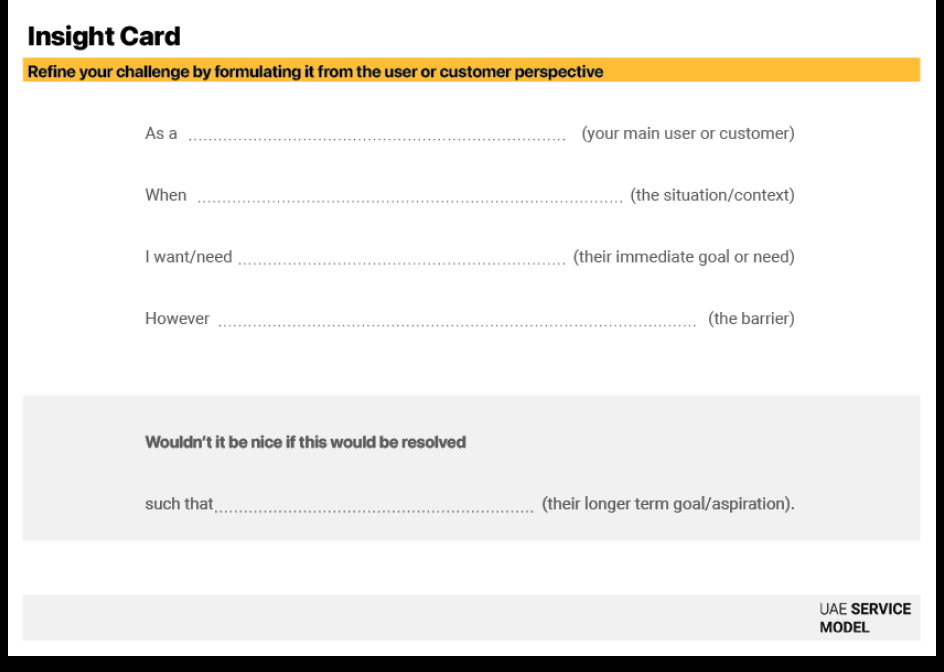
تُعد بطاقة الفرص أداةً لضمان التوافق الاستراتيجي تستخدم في المراحل الأولى من المشروع لمساعدة الفرق على تحديد مجالات التحسين والابتكار وترتيب أولوياتها قبل الانتقال إلى توليد الحلول التفصيلية. وتعمل هذه الأداة على سد الفجوة بين سؤال "ما الذي يحتاجه المتعامل؟" (المعلومات القائمة) وسؤال "ما هي أهداف الجهة الحكومية؟" (الاستراتيجية). ومن خلال ربط القيمة التي يحققها المتعامل بمؤشرات أداء الجهة ضمن صفحة واحدة، تساعد هذه البطاقة فرق العمل على التحقق من جدوى الفرصة المطروحة وضمان أن أي حل مستقبلي سيحقق قيمة مزدوجة للمتعامل والجهة الحكومية على حد سواء، ما يوفر وضوحاً وتوافقاً منذ البداية.

من 15 إلى 30 دقيقة للتحضير (المسؤولون عن المنتج)، من 15 إلى 30 دقيقة إضافية لتوحيد أهداف الفريق.

من المتوسط إلى المتقدم

التعريف وصياغة الاستراتيجية

معلومات المتعاملين والتوجهات الاستراتيجية

نموذج بطاقة الفرص وأفكار ونتائج الأبحاث والأهداف الاستراتيجية الحكومية

فريق متعدد التخصصات (من مصممي الخدمات والمسؤولين عن المنتجات ومحللي أداء الجهات وممثلي القيادة)
اكتب جملة واحدة تصف الوضع المستقبلي الذي يسعى الفريق إلى تحقيقه. ما هو الهدف النهائي الذي نريد الوصول إليه؟
صف الفجوة الاستراتيجية أو الهدف الذي تسعى الجهة إلى تحقيقه. ما هي المشكلة التي تعمل الحكومة على حلها؟ (مثل: ارتفاع التكاليف أو عدم الامتثال أو بطء إجراءات معالجة الطلبات).
وضّح القيمة التي سيحصل عليها المتعامل. ما هو المطلب أو التحدي الذي نعالجه؟ (مثل: توفير الوقت أو تقليل التوتر أو تعزيز سهولة الوصول).
أدرج مقاييس محددة تُظهر نجاح الجهة (مثل: نسبة تقليص الأعمال اليدوية ووفورات الميزانية).
أدرج مؤشرات تثبت القيمة المحققة للمتعامل (مثل: مستوى الرضا وتقييم سهولة الاستخدام).
استخدم بطاقة الفرصة المكتملة للحصول على موافقة القيادة وأصحاب القرار قبل البدء في أعمال التصميم.
توليد مقاييس الأداء: أدخل الهدف الاستراتيجي إلى أداة الذكاء الاصطناعي (مثل: نحتاج إلى خفض التكاليف التشغيلية لمعالجة الإقامة) واطلب: "اقترح 3 مقاييس أداء كمية و3 مقاييس لاستفادة المتعامل من أجل قياس النجاح في هذا الهدف".
تحسين صياغة الفرصة: قدم مسودة صياغة الفرصة التنظيمية/الاستراتيجية واستفادة المتعامل إلى أداة الذكاء الاصطناعي واطلب: "قيّم هذه الصياغة بشكل نقدي. هل العلاقة بين الهدف التنظيمي والفائدة المقدمة للمتعامل منطقية وقوية؟".
تغيير المنظور: استخدم رمز الاستجابة السريعة الخاص بإعادة صياغة التحدي للمساعدة في استعراض الهدف الاستراتيجي من زوايا متعددة (منظور المتعامل مقابل منظور النظام) وتوليد مقترحات أكثر توازناً تربط بين احتياجات الجهة واحتياجات المتعامل.
تغيير المنظور: استخدم رمز الاستجابة السريعة الخاص بإعادة صياغة التحدي للمساعدة في استعراض الهدف الاستراتيجي من زوايا متعددة (منظور المتعامل مقابل منظور النظام) وتوليد مقترحات أكثر توازناً تربط بين احتياجات الجهة واحتياجات المتعامل.
تجنب الأهداف الفضفاضة أو غير الواضحة مثل: "تعزيز السعادة". ولكن استخدم "تقليل زمن الانتظار بنسبة 50٪".
إذا كانت أمامك خمس مسارات أو اتجاهات محتملة، أنشئ خمس بطاقات فرص، حيث تسهل المقارنة بينها تحديد الفرصة التي تقدم أفضل عائد على الاستثمار.
من الأفضل استخدام بيانات حقيقية لدعم الرؤية. وإذا كان لا بد من البدء بافتراضات، فيجب توضيحها وترتيبها حسب الأولوية لإجراء مزيد من البحث والتحقق لاحقاً.
سيناريو "التجديد دون أي تدخل": تستكشف جهة حكومية سبل تحسين عملية التجديد السنوي للمزايا الاجتماعية.
السياق: لدى الجهة توجه استراتيجي لتقليل العبء الإداري. وتظهر الأبحاث أن المتعاملين يشعرون بالضغط والتوتر بسبب المواعيد النهائية السنوية.
استخدام الأداة: يستخدم الفريق بطاقة الفرص لتحديد مساحة الفرصة الاستراتيجية قبل اتخاذ قرار بشأن الحل المناسب (مثل: إنشاء موقع إلكتروني جديد مقابل الأتمتة الكاملة للعملية).

مبادئ تصاميمنا المرتبطة ببطاقة الفرص.
مبادئ خدماتنا المرتبطة ببطاقة الفرص.