Conversational tools
Use interactive systems that engage in natural language conversations with users.


الاستفادة من الذكاء الاصطناعي لتحسين العمليات التشغيلية مع الحفاظ على تجربة إنسانية موثوقة للمتعاملين.

يمكن للذكاء الاصطناعي تحسين عمليات تقديم الخدمات وتسريع وتيرتها، ما يمكّن الحكومات من تقديم خدمات مشخصنة أكثر كفاءة واستجابة. كما يسهم الذكاء الاصطناعي في إنجاز المهام المتكررة وتحليل كميات هائلة من البيانات بشكل آني ودعم اتخاذ القرار، ما يعزز في نهاية المطاف جودة الخدمات وسرعة تقديمها. ومع ذلك، يتعين تصميم أنظمة الذكاء الاصطناعي ودمجها بعناية فائقة، إذ يجب أن تتماشى مع المعايير الأخلاقية وتمنح الأولوية لتجربة المتعامل وتلتزم بقوانين حماية البيانات.
كما ينبغي أن تتكامل الخدمات المدعمة بالذكاء الاصطناعي بسلاسة مع الدعم البشري، مع إتاحة التحكم للمتعامل في مسار التجربة، ما يشمل إمكانية الخروج من العمليات المعتمدة على الذكاء الاصطناعي أو إعادة توجيهها والانتقال إلى الدعم البشري عند إخفاق الذكاء الاصطناعي أو تسببه في الارتباك. إضافة إلى ذلك، يجب أن يركز تصميم واجهات الذكاء الاصطناعي على التفاعلات البديهية، ما يحد من الالتباس ويضمن قدرة المتعاملين على استخدام التقنية بسهولة ويسر.
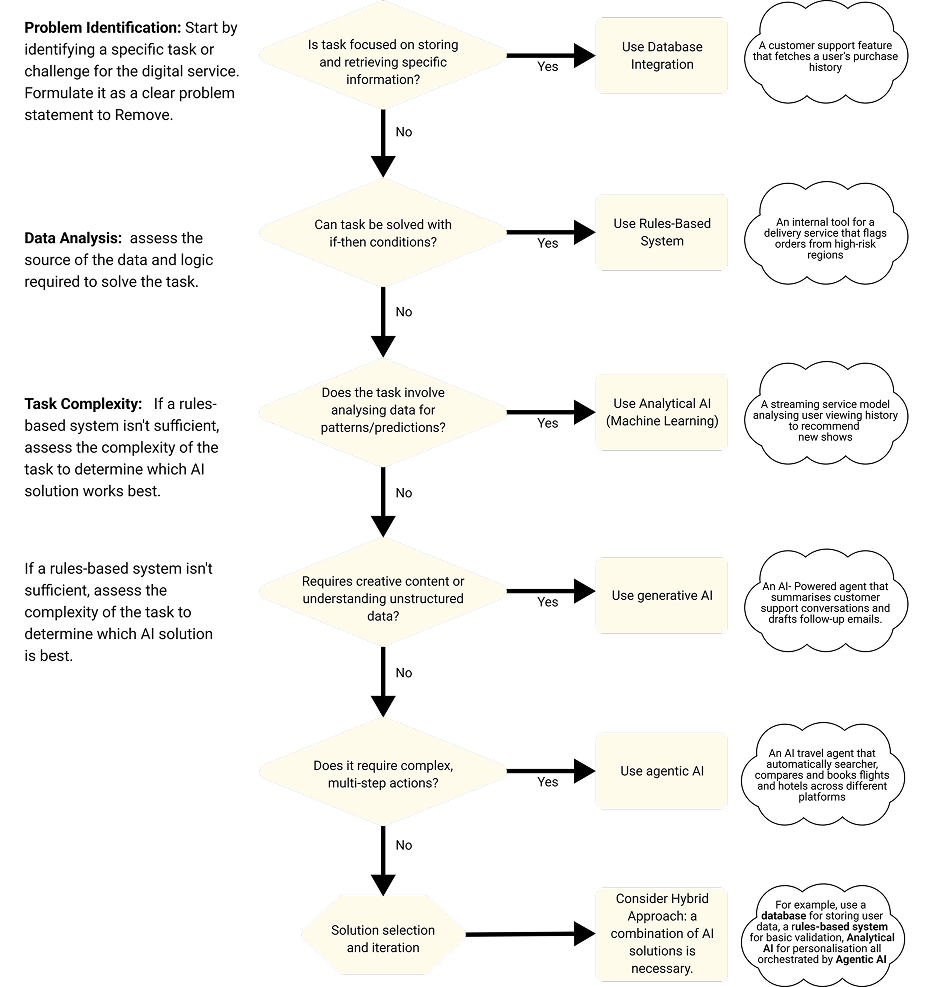
يحوّل الذكاء الاصطناعي الخدمات الحكومية إلى تجارب استباقية مشخصنة تتسم بالكفاءة العالية، مع القدرة على التوسع لتلبية أي مستوى من الطلب.
ويساعد على تسريع عمليات الخدمات، ما يقلل أوقات الانتظار ويمكّن الجهات من التعامل فورياً مع زيادة أعداد الطلبات.
كما تتكيّف الخدمات في الوقت الفعلي مع احتياجات كل متعامل على حدة، وتقدم إرشادات ونتائج مخصصة تُسهم في رفع مستويات رضا المتعاملين.
وتصبح منظومة الخدمات أكثر مرونة وقدرة على إدارة الارتفاعات المفاجئة في الطلب دون الحاجة إلى موارد بشرية إضافية.
ويتم تبسيط الإجراءات المعقدة من خلال الأتمتة، ما يجعل التنقل داخل الخدمات أكثر سهولة لمختلف شرائح المتعاملين، بغض النظر عن مستوى خبرتهم التقنية.

The service creates personalized connections that mimic genuine human exchanges, avoiding robotic or purely transactional tones when appropriate.

Users are never trapped in automated loops; they retain the ability to easily reroute processes or instantly access a human agent if the AI fails or causes frustration.

User trust is preserved through strict data minimization and anonymization, ensuring personal information is protected by default and complies with all regulations.

AI capabilities are presented through simple, user-friendly interfaces and ready-to-use prompts that require no technical expertise to navigate.

The service is designed to be consumed by external AI agents, enabling broader integration and flexible service delivery across different platforms.

The service operates on thoroughly tested systems that prevent hallucinations and mitigate security risks, particularly for sensitive tasks.
يتعين على المتعاملين الذين يرغبون في التقدم بطلب للحصول على إقامة حكومية تقديم مستنداتهم الشخصية وإتمام إجراءات الفحص الأمني. وبناءً على ذلك، يجب استكمال هذه المتطلبات قبل الوصول إلى النتيجة المرجوة والحصول على إقامة معتمدة. في الخدمة المدعمة بالذكاء الاصطناعي، تتم معالجة بيانات التحقق الأمني ومطابقتها مع قواعد البيانات الحكومية، ما يوفر آلية أسرع لاتخاذ القرار.
يتطلب التقدم للحصول على الدعم الحكومي تقديم معلومات الدخل والعائلة. ويتعين على المتعامل تقديم المستندات المطلوبة ليحللها نظام الذكاء الاصطناعي ويطابقها مع معايير الاستحقاق، مع احتساب قيمة الدعم تلقائياً وتسريع إجراءات الموافقة.
مصادر إضافية حول سبل تقديم خدمات تُجسّد الاستباقية.
مبادئنا التصميمية المرتبطة بالخدمات المدعّمة بالذكاء الاصطناعي.