Testing
Test experiences, iterate, and improve.


Ensuring equal access and participation to everyone.

Inclusivity in designing for a product or a service refers to the practice of considering and accommodating the diverse needs, abilities, and preferences of a wide range of users or customers.
It involves creating designs that are accessible, usable, and enjoyable for all individuals, regardless of their age, gender, ethnicity, language, physical or cognitive abilities, or any other characteristic.
Inclusive design aims to eliminate barriers and ensure equal access and participation for everyone. It involves conducting research and gathering insights about different user groups, understanding their unique requirements, and incorporating those insights into the design process.
This can include providing alternative communication methods, considering different cultural perspectives, offering adjustable interfaces, or considering assistive technologies.
To achieve inclusive design, entities need to focus on two areas:
Accessibility
Usability
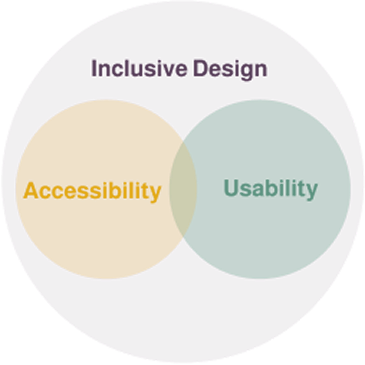
By adopting an inclusive design approach, entities can create products and services that cater to a larger audience, enhance user satisfaction, and promote equal opportunities and social inclusion.
It goes beyond mere compliance with accessibility standards and focuses on embracing diversity and providing a seamless experience for all users.




Further resources relating to how we provide services that demonstrate inclusivity.
Our design principles that relate to inclusivity.