Agile Teams
Develop cross-functional, collaborative agile teams to drive success.

Agile team setup roles and responsibilities
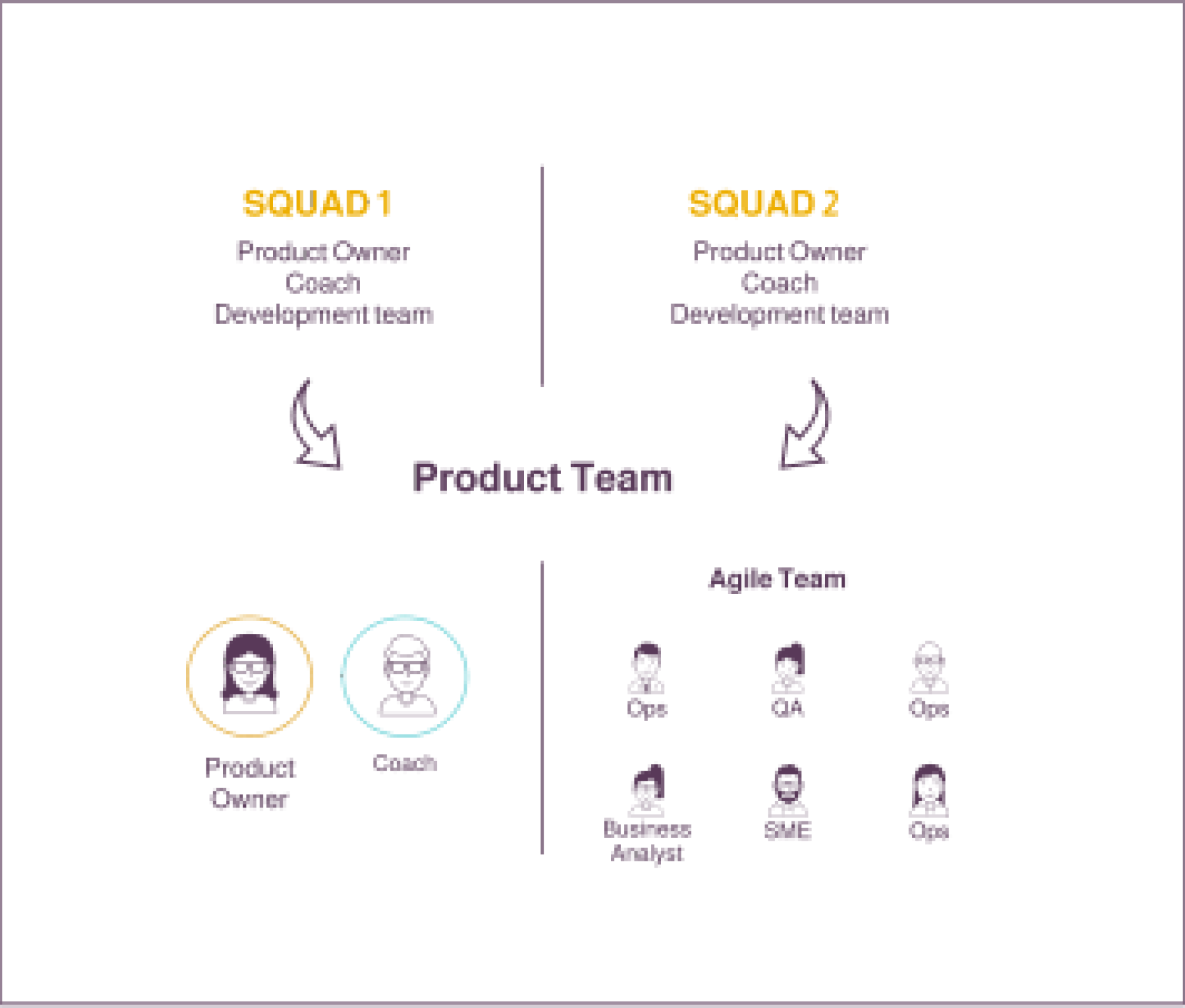
While setting up an agile process, teams become central to the planning and design phase. Agile product teams are typically built around squads allowing them to scale up in case workload increases. Each squad is comprised of ten or fewer people, including one product owner, coach and a development team. Agile development teams may vary depending on project scope and size. Roles described below are illustrative.

Decision-maker responsible for the vision, the backlog and the value delivered by the Product team.

Leader responsible for making sure agile practices and rules are applied by the team.
Benefits of an agile team
Work happens simultaneously, not sequentially, which allows for greater flexibility.
Needed capabilities are gathered upon set up, which ensures the right skills are available for execution.
Cross-collaboration is emphasised, which helps the team move faster.
Team morale improves, as it is designed to maximise communication and teamwork.
What to watch out for
Some roles (e.g. service owners, designers) which have overall view of the product / service should not be outsourced to ensure delivery success and consistency.
While designing teams, mixed reporting lines of resources should be avoided to maintain clear accountability.
Ensure that the squads are focused on launching one product / feature.
Resources within a team should be dedicated full time. Part-time resource allocation can hinder timely progress due to multiple reporting lines.