

Omnichannel
Design an omnichannel experience.

What is an omnichannel experience?
It is a comprehensive approach to ensuring high-quality interactions between the government and customers across all available channels, rather than focusing on individual channels. Unlike multi-channel marketing, omnichannel design requires the development of a cohesive strategy that encompasses all possible forms of customer interaction, rather than just the most frequently used channels like websites and mobile apps.
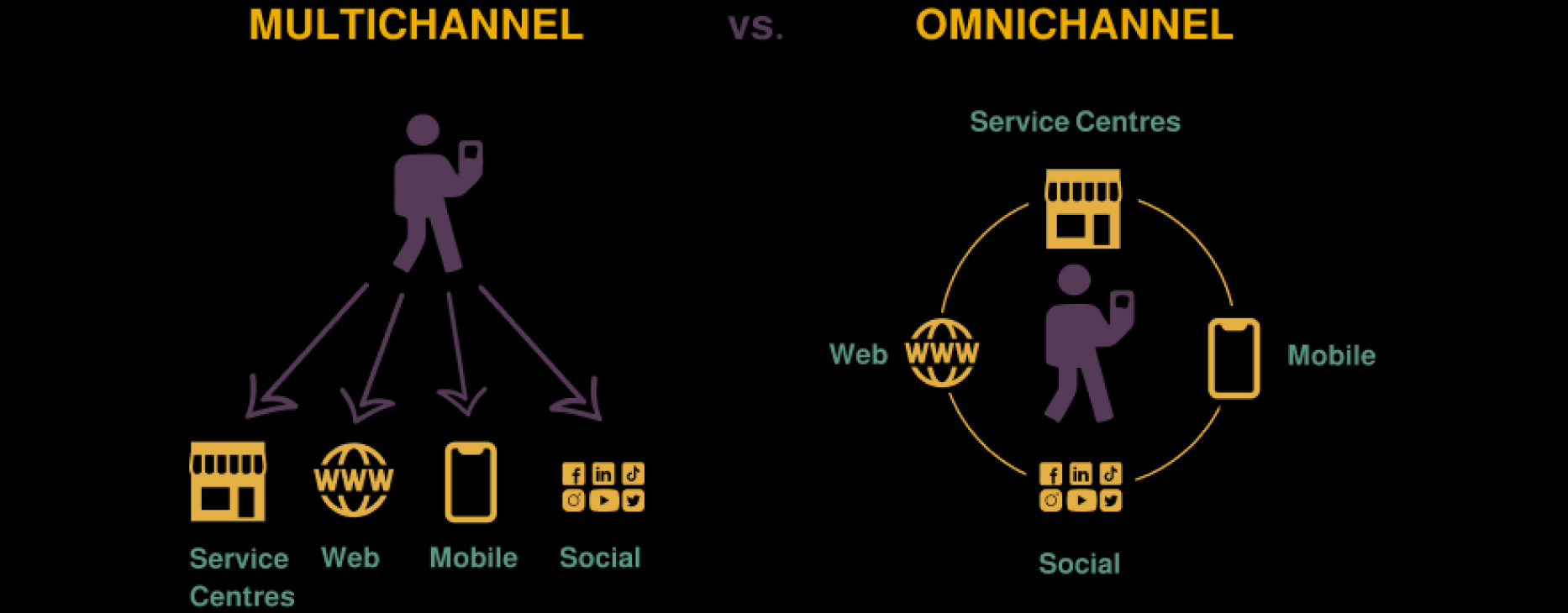
The impact of developing an omnichannel experience

Citizens can access government services on the channel of their choice, whether it be online, by phone, or in-person. This increases convenience and accessibility for citizens who may have different preferences or needs.

An omnichannel approach can streamline processes and reduce wait times by allowing citizens to complete transactions on their own schedule, and reducing the need for manual intervention.

An omnichannel approach can provide a more personalised and responsive customer service experience, as interactions are tracked across channels, and information is shared seamlessly between service representatives.

Employees will feel more empowered in their jobs, as they are working within a system based on multiple channels that are robust, flexible, and effective.

By tracking interactions across channels, an omnichannel approach can provide citizens with greater visibility into the status of their requests or applications.

An omnichannel approach can improve the collection of data and feedback from citizens, which can help agencies improve their services and make data-driven decisions.
Defining target experiences
Having gained a thorough comprehension of our personas, their needs, and challenges, and substantiated our assumptions with relevant data and analysis, the next step is to conceptualize and design the target state journey. The customer’s journey is the sum of the interactions between the user and the entity, which are documented in steps in order to facilitate analysis and development. As for the federal entities, the journey of the user should be designed in five key stages (see diagram below).
The aim is to create a seamless and consistent journey experience for users as they interact with a product or service. It involves mapping out the different touchpoints and steps that a user will go through in their journey, and ensuring that each touchpoint is connected and contributes to an overall positive experience. The goal is to make the user journey as simple, clear, and intuitive as possible.
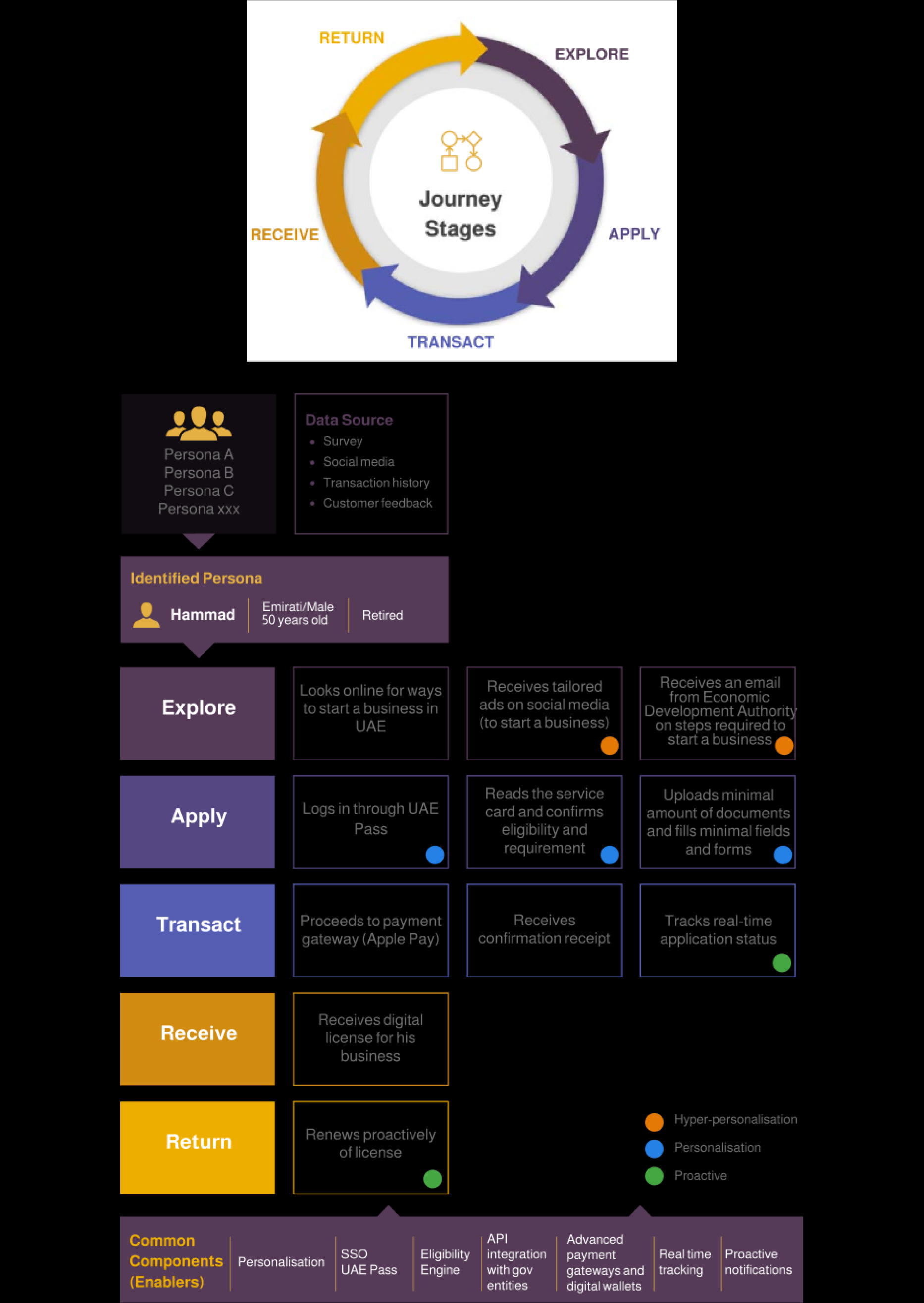
The impact of developing an omnichannel experience

A unified user journey ensures that the user’s interaction with the organization is seamless and consistent across different touchpoints. This, in turn, enhances the user experience and reduces frustration and confusion.

A unified user journey helps the organization to streamline its processes, reduce redundancies, and eliminate silos. This results in increased efficiency and productivity.

An omnichannel approach can provide a more personalised and responsive customer service experience, as interactions are tracked across channels, and information is shared seamlessly between service representatives.

A unified user journey enables the organization to gather more comprehensive data on user behaviour and preferences, which can be used to improve products and services, personalise offerings, and create more targeted marketing campaigns.
Channels and touchpoints
Having a single consolidated view of customer behaviour across various channels (web, mobile, and service centres) allows entities to develop detailed user journey mapping interactions and touchpoints across various channels.
Maintaining consistency in user experience across channels is crucial. Whether a user applies for a service on a website or an app, the same forms, fields, and documents should be required. If the service takes 2 minutes to complete on the website, it should take the same amount of time on the app.